Buyer Guide
Silk Printing vs Laser Engraving for Sex Toy Logos
Short Answer
Compare appearance, material compatibility, durability, color, setup and MOQ considerations for intimate wellness product logos.
A private-label logo method should be chosen for the actual product material, surface, geometry, and brand design. Silk printing can add a visible color mark; laser engraving or etching can create a precise permanent-looking mark on suitable materials. Neither process is universally better, and neither is suitable for every product.
JWELL can discuss silk printing, laser engraving or etching, and model-dependent branding methods. Final feasibility is confirmed against the selected model and artwork.
What is silk printing?
Silk printing, commonly called screen printing, transfers ink through a prepared screen onto the product surface. It can create a clear one-color or limited-color logo and is widely used where the product material, finish, and geometry accept the ink and printing process.
The process normally requires artwork preparation, screen setup, ink selection, positioning, printing, curing, and an adhesion or appearance review. Curved, soft, textured, or small surfaces can restrict the printable area and level of detail.
What is laser engraving or etching?
Laser engraving or etching uses controlled laser energy to create a mark on a compatible surface. The exact result depends on material and process: it may remove, alter, or discolor the surface rather than add colored ink.
Laser methods can produce fine lines and consistent positioning on suitable rigid components, but the result’s contrast and color are determined by how the material reacts. A digital preview cannot reliably show the final appearance without a sample on the actual part.
Material compatibility
Compatibility should be confirmed by component, not only by the product’s general material description.
- Rigid plastic housings: may support printing or certain laser processes depending on resin, coating, color, and surface.
- Metal components: may support laser marking or other methods depending on alloy and finish.
- Silicone or soft surfaces: can be more challenging because of flexibility, texture, release agents, coatings, and adhesion behavior.
- Coated or soft-touch parts: require care because marking can affect or expose the coating.
- Multi-material products: may offer a small rigid end cap or control area even when the main body is soft.
Ask which exact part receives the logo and request a physical sample when appearance or durability is critical.
Silk printing vs laser engraving
| Comparison | Silk printing | Laser engraving / etching |
|---|---|---|
| Appearance | Ink sits on the surface and can create visible contrast. | Mark is created by the surface reaction; appearance varies by material. |
| Color | Can use approved ink colors within process limits. | Normally follows the material’s laser response rather than an added print color. |
| Material compatibility | Depends on ink adhesion, surface, coating, softness, and cure. | Depends on laser-compatible material, coating, and desired contrast. |
| Durability | Depends on ink, preparation, cure, contact, and cleaning conditions. | Can be durable on compatible parts, but result must be sampled and reviewed. |
| Design flexibility | Works well for clear logos; very fine details and multiple colors may add complexity. | Can reproduce fine details within part size and contrast limits. |
| Surface geometry | Printing fixture and screen access limit curved or small areas. | Laser focus, access, curvature, and part positioning affect feasibility. |
| Setup | Screen, ink, fixture, alignment, and curing setup. | Machine settings, fixture, positioning, and material tests. |
| Typical use | Visible colored branding on approved product surfaces and packaging. | Subtle or precise marks on suitable rigid components. |
Durability and cleaning
Durability should be evaluated in the context of the product. Surface contact, flexing, abrasion, cleaning method, exposure to liquids, coatings, and storage all affect results.
Ask for a sample and agree on a reasonable review method. Do not claim a print or laser mark is permanent under every condition. Product instructions should describe approved cleaning rather than force the logo to withstand an unspecified process.
Color and brand consistency
Silk printing allows a color direction, but printed ink on a product does not automatically match the same color on a paper box or a screen. Substrate, finish, opacity, lighting, and process affect perception. Approve the product logo and packaging print as separate physical references.
Laser marking normally has a material-dependent color. If exact brand color is essential, a compatible printing method may be preferable; if a subtle tonal mark fits the brand, laser can be considered on suitable parts.
Cost and setup considerations
Do not compare only unit price. Review the setup and project conditions:
- Artwork preparation
- Screen, fixture, or laser setup
- Number of colors
- Logo area and curvature
- Part handling before final assembly
- Sample and approval work
- Reject or rework risk
- Order quantity and repeat-order plan
Standard MOQ is 100 pieces with JWELL standard packaging and custom-logo MOQ is 500. A logo on an easy-to-handle rigid cap can have different technical requirements from a large mark on a curved soft body.
When to choose silk printing
Silk printing may be a practical route when:
- A visible logo color is important
- The selected surface has confirmed ink compatibility
- The artwork is clear and appropriate for the print area
- The product geometry allows stable positioning
- A physical sample meets appearance and adhesion expectations
When to choose laser engraving
Laser engraving or etching may be considered when:
- The product has a suitable rigid component
- A precise, tonal, or understated mark suits the brand
- The material creates acceptable contrast
- Ink color is not required
- A physical sample confirms appearance and surface effect
Other branding methods
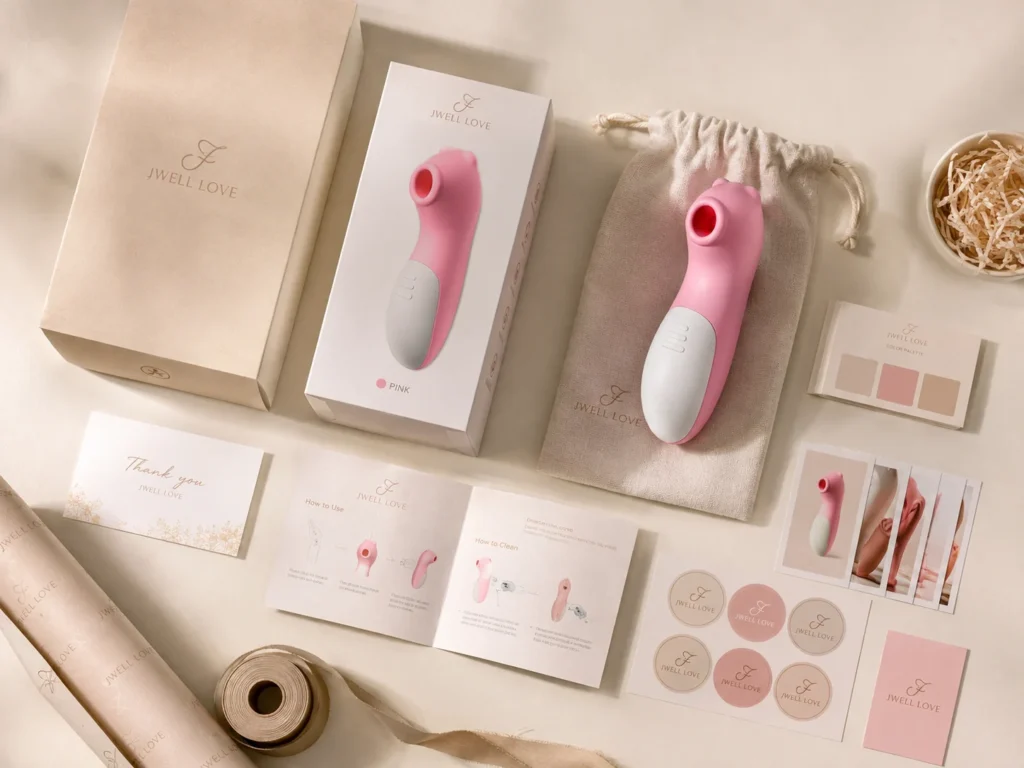
Some products may support other model-dependent methods, and the packaging itself creates additional brand surfaces. Alternatives can include molded marks, labels, printed sleeves, packaging graphics, manuals, pouches, accessories, or other project-specific applications.
A product with limited marking space can still deliver a strong brand system through coordinated product color, box, insert, manual, and label design. Review the packaging checklist rather than forcing an oversized product logo.
Artwork preparation checklist
- Vector logo file supplied
- Minimum size and fine-line details reviewed
- Product model and exact logo part identified
- Position and orientation marked
- Print color or expected laser appearance discussed
- Surface and material confirmed
- Sample requirement agreed
- Approval photo and physical reference recorded
- Packaging logo coordinated separately
Frequently asked questions
Can any vibrator have a laser-engraved logo?
No. Suitability depends on the exact component material, coating, geometry, color, and laser response. The model must be reviewed.
Can silk printing use multiple colors?
Multiple colors may be technically possible on some projects, but each color adds setup and alignment considerations. Feasibility and MOQ should be confirmed against the logo and surface.
Which method lasts longer?
There is no universal answer. Laser can create a durable mark on a compatible rigid material; a correctly prepared print can also perform well. Sample the actual method and product under the intended cleaning and handling conditions.
Can the product logo match the box exactly?
The same reference can guide both, but ink, substrate, finish, and laser response differ. Approve each physical application rather than relying on one screen color.
Browse the product catalog, review the private-label process, and send the selected model plus vector logo for a method review.
Review Logo Application Options
Related JWELL planning pages
Review the private-label workflow, compare private-label vibrator models, browse all products, or send artwork and project requirements.