Buyer Guide
How to Build a Wholesale Adult Toy Product Range
Short Answer
A distributor framework for category roles, product selection, samples, MOQ, private label, packaging, documentation, landed cost, and replenishment.
A strong wholesale adult toy product range is a planned assortment, not a large collection of unrelated models. Define the buyer segments, sales channels, price positions, category roles, and quantity targets first. Then shortlist products with distinct functions and presentations, review exact samples, calculate packaging and logistics, and decide which items justify private label or custom development.
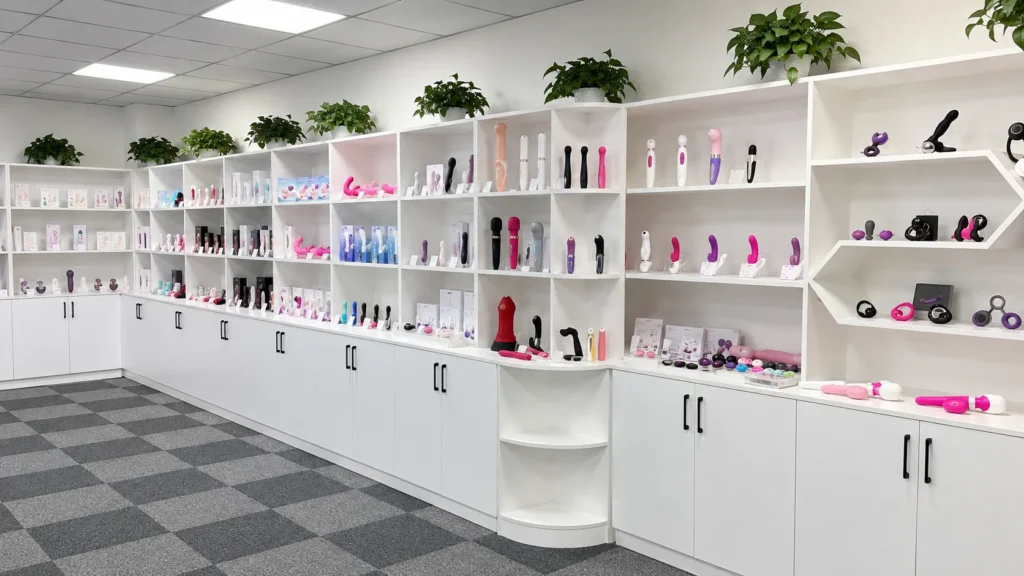
JWELL organizes published products into buyer-facing categories: Vibrators & Wands, Suction & Air-Pulse, App-Controlled & Wearable, Male Wellness, Anal & Prostate, Dildos & Specialty, and Kegel Exercisers. Only published products appear in these category archives.
1. Start with the customer and channel
Write down where the products will be sold and who will buy from you. A specialist distributor, chain retailer, marketplace seller, and emerging private-label brand can require different price bands, packaging, documentation, product education, order quantities, and replenishment speeds.
For the buying route, compare JWELL’s wholesale supply workflow and distributor assortment planning before setting the first range brief.
Define the countries, channel mix, target price architecture, available shelf or warehouse space, package expectations, languages, launch timing, and total initial investment range. This turns a catalog search into a commercial selection process.
2. Give every category a job
Do not begin by choosing a fixed number of products from every category. Decide which categories are core, supporting, or experimental for your channel. A new range might use vibrators and suction products as core categories, add a small app-controlled and male wellness selection, and test specialty items in a controlled quantity. Another distributor may use a completely different balance.
For each category, define the target number of SKUs, expected price bands, feature gaps, and quantity allocation. Remove products that repeat the same function and price without adding a clear reason to buy.
3. Assign product roles inside each category
- Entry: straightforward product and accessible price position.
- Core: central item expected to support regular volume.
- Feature: differentiated function or presentation.
- Premium: stronger specification, package, or commercial position.
- Test: controlled quantity used to evaluate a new format.
- Private-label anchor: selected for branding and replenishment.
A model can fill more than one role, but the buyer team should agree on the primary reason it belongs. This supports pricing, product pages, sales training, inventory planning, and reorder decisions.
For a four-function assortment role, compare JW-S41: 4-in-1 Thrusting & Rotating Vibrator, which combines vibration, thrusting, digging and rotation. Evaluate its exact configuration separately from simpler vibrator formats.
For distinct vibrator roles, compare JW-S39: Memory Function Wand Massager, which adds memory function to a wand format, and JW-S42: Curved Remote-Control Silicone Vibrator, which combines a curved body with remote control. Compare each against its own sample and specifications.
For a couples-focused assortment role, compare JW-S48’s U-shaped format with JW-S45’s dual-ring format. Treat them as different product structures and confirm the exact model and accessories on samples before selecting a range.
For a pelvic-floor assortment, compare the JW-S38 single and double Kegel ball set as a separate product format. The Kegel exerciser wholesale buyer guide outlines how to confirm the exact model, configuration, and buyer requirements before shortlisting.
4. Use a consistent product comparison sheet
Compare every shortlisted model using the same headings: public model, product type, confirmed functions, controls, number of modes where verified, material, dimensions, weight, charging, battery information where available, waterproof rating, color, package contents, package size, gross weight, carton data, sample status, standard MOQ, logo MOQ, color MOQ, packaging MOQ, custom-development route, documentation status, and open questions.
Unknown fields should stay blank or marked for internal confirmation. Do not copy data from another model. A disciplined comparison sheet reduces errors when several buyers or team members review the range.
5. Shortlist before requesting samples
Requesting a large number of unfiltered samples creates cost without improving decisions. First remove models that do not fit the channel, price position, function gap, package requirements, or target market. Then request a focused group with a written review plan.
For each sample, check the public model, version, color, function, controls, charging, dimensions, material, finish, package contents, instructions, package protection, and presentation. Record the result and decide: reject, revise, hold, or approve for the next commercial step.
6. Build quantity scenarios
Prepare at least two scenarios. A market-test scenario may use selected standard products and available presentation. A private-label scenario may add logos, custom colors, printed packaging, inserts, labels, and manuals. If a key product requires modification or custom development, treat it as a third project with its own engineering and commercial plan.
Ask for sample, standard order, logo, color, packaging, and custom-development quantities separately. Use the MOQ Guide and Low-MOQ planning page to avoid comparing unlike scopes.
7. Choose where private label creates value
Not every SKU needs the same level of customization. Private label is most useful where branding, packaging, repeat orders, and assortment continuity justify the work. Some test items can remain standard while core products receive branded packaging. A strategic product may later move into modification or custom development.
Separate the requested scope into existing model, logo, color, packaging, manual, selected modification, and custom development. Custom concepts, industrial design, prototypes, electronics, tooling or mold, and pre-production samples remain subject to technical review, cost, MOQ, and approved requirements. See Private Label for the three development levels.
8. Create a packaging system, not isolated boxes
Packaging must fit the product, but the range can still share visual rules. Define logo use, typography, color families, information hierarchy, label placement, language approach, barcode ownership, manual format, and carton marks. Then adapt the structure to each product’s dimensions and accessories.
Review package size, gross weight, carton quantity, carton dimensions, protection, retail presentation, and warehouse efficiency. Packaging can materially change freight and landed cost. The Packaging Checklist provides a detailed approval list.
9. Include quality and documentation in selection
Define destination-market requirements before final product approval. Ask what documentation is available for each exact model and whether additional review is required. Do not assume that one report, material record, or conformity document applies across the entire range.
Create inspection criteria from the approved sample and specification. Review product appearance, function, controls, charging, color, logo, package contents, artwork, labels, manuals, and applicable documentation. Refer to Quality & Compliance for the current buyer review path.
10. Calculate landed assortment cost
Compare more than the unit product price. Include samples, branding, color, packaging, inserts, manuals, tooling or development where applicable, testing or documentation work where required, inspection, cartons, freight, duties, storage, payment terms, and expected inventory turns. The Manufacturing Cost Guide helps organize these cost inputs.
A model with a lower unit price can produce a higher landed cost if the package is large, the carton is inefficient, or the MOQ creates excess inventory. Use quantity and freight assumptions that match the intended order.
11. Plan replenishment before launch
Record the approved model, configuration, color, logo, package version, artwork files, labels, manuals, documents, carton data, supplier communication, and order history. Establish who reviews changes and how discontinued or revised models will be handled. A repeatable record is essential when the range grows.
Set review points after launch: sales by model, gross margin, returns or quality feedback, buyer questions, inventory cover, reorder timing, and products that duplicate one another. Use real sales and inquiry information to decide which products to expand, revise, or remove.
Wholesale range planning checklist
- Target markets, channels, buyer segments, and price architecture are defined.
- Every category and model has a commercial role.
- Specifications are confirmed by public model number.
- Samples are shortlisted and reviewed with one consistent checklist.
- Sample, standard, logo, color, packaging, and development quantities are separate.
- Packaging, carton, freight, and landed cost are included.
- Documents and claims are reviewed by exact model and destination.
- Private-label effort is focused on commercially important products.
- Replenishment records and post-launch review points are prepared.
Frequently asked buyer questions
How many products should a first range include?
There is no universal number. Choose enough products to cover clear category and price roles without unnecessary duplication, then align the total with budget and inventory capacity.
Should every product use custom packaging?
No. Buyers can compare a standard market-test route with a branded route and focus packaging investment on the most important SKUs.
Can several categories be included in one inquiry?
Yes. List the JW-S models, quantity by model, market, branding, packaging, documents, destination, and schedule in one structured RFQ.
When should custom development be considered?
Consider it when existing models cannot meet an important commercial or technical requirement and the project can support engineering, cost, MOQ, and approval needs.
What makes a quotation comparable?
Use the same specification, quantity, branding, packaging, documentation, destination, and shipping scope for every option being compared.