Buyer Guide
Sex Toy Sample & Production Lead Time Guide for Buyers
Short Answer
Plan sample, artwork, packaging, production, inspection and freight as separate milestones. A schedule depends on what has been approved at each stage. Confirm the selected model and project scope before quoting a delivery date.
“How fast can you ship?” cannot be answered responsibly until the buyer separates sample dispatch, customized sampling, artwork approval, packaging, bulk production, inspection, and freight. Each stage has a different starting condition, and one late approval can move the whole schedule.
JWELL’s confirmed policy is Sample Available: Yes; Sample Quantity: 1–5 pcs; Sample Lead Time: 5-7days. Sample pricing and shipping are confirmed according to the selected model and destination. Bulk lead time is usually about 30 days after the sample, quantity and packaging are approved. Agree the start conditions and preparation schedule for the exact request; sample preparation time is not a freight transit or delivery guarantee.
Build the schedule from milestones
A practical timeline follows this sequence:
Inquiry → Model selection → Sample → Product approval → Artwork → Packaging sample → Pre-production approval → Bulk production → Inspection → Shipment
Some work can overlap, but the buyer should know which milestone releases the next stage. For example, final packaging dimensions can depend on the approved product, while bulk packaging printing should wait for approved artwork.
Stock sample lead time
The confirmed Sample Lead Time is 5-7days. Confirm model availability and the preparation schedule for the exact request. Dispatch time is not delivery time: courier transit, customs, destination and local delivery affect arrival.
Before payment, confirm:
- Exact model and color
- Whether the sample is in stock
- Included accessories and standard packaging
- Dispatch reference and courier method
- Sample fee and freight
- Whether a possible future-order credit can be discussed
Sample charges and possible credits against future orders can be discussed based on the project. They should not be treated as an automatic rebate.
Customized sample lead time
A customized sample requires more preparation than a stock sample. Timing depends on what changes:
- Logo method and artwork readiness
- Color matching and component availability
- Selected function or component modification
- Prototype or tooling requirement
- Packaging structure and print method
- Number of revisions
Ask whether the sample is an appearance sample, functional sample, logo sample, packaging sample, prototype, or pre-production sample. Each answers a different approval question.
Artwork approval
The buyer controls how quickly complete files are supplied and approved. Logo application may require vector artwork, print color, size, position, and method. Packaging may require a dieline, graphics, copy, barcode, labels, manual, languages, warnings, and outer-carton information.
Use one versioned approval pack. Sending revised logos in chat, updated text by email, and an old dieline through a file link creates delay because the production team must reconstruct which version is final.
Packaging sample timing
Packaging work can include structure sampling, digital or production print sampling, insert fitting, manual printing, label checks, barcode scans, and a final packed sample. A simple paper box and label is not scheduled like a rigid gift box with a custom insert.
Custom-packaging MOQ is 500. Quantity, finish, material and file readiness all affect timing. Use the packaging checklist before the printer receives final files.
Pre-production sample
A pre-production sample brings together the approved product, color, logo, functions, accessories, and packaging before the commercial run. It is especially important when several customized elements interact.
Approval should identify:
- Product model and sample version
- Approved specifications and functions
- Color and surface
- Logo method and position
- Accessories and charging components
- Packaging, insert, manual, labels, and barcode
- Allowed corrections or deviations
Bulk production should not start while key decisions remain open.
Bulk production lead time
Bulk lead time is usually about 30 days for each agreed project. Scheduling depends on:
- Selected model
- Order quantity and color split
- Logo or product customization
- Packaging production
- Artwork approval
- Sample confirmation
- Component and material readiness
- Production schedule
The reference should begin from an agreed production-release milestone, not from the first inquiry. Full custom development has a separate design, prototype, tooling, and validation schedule and cannot use this production reference as its total project timeline.
Inspection timing
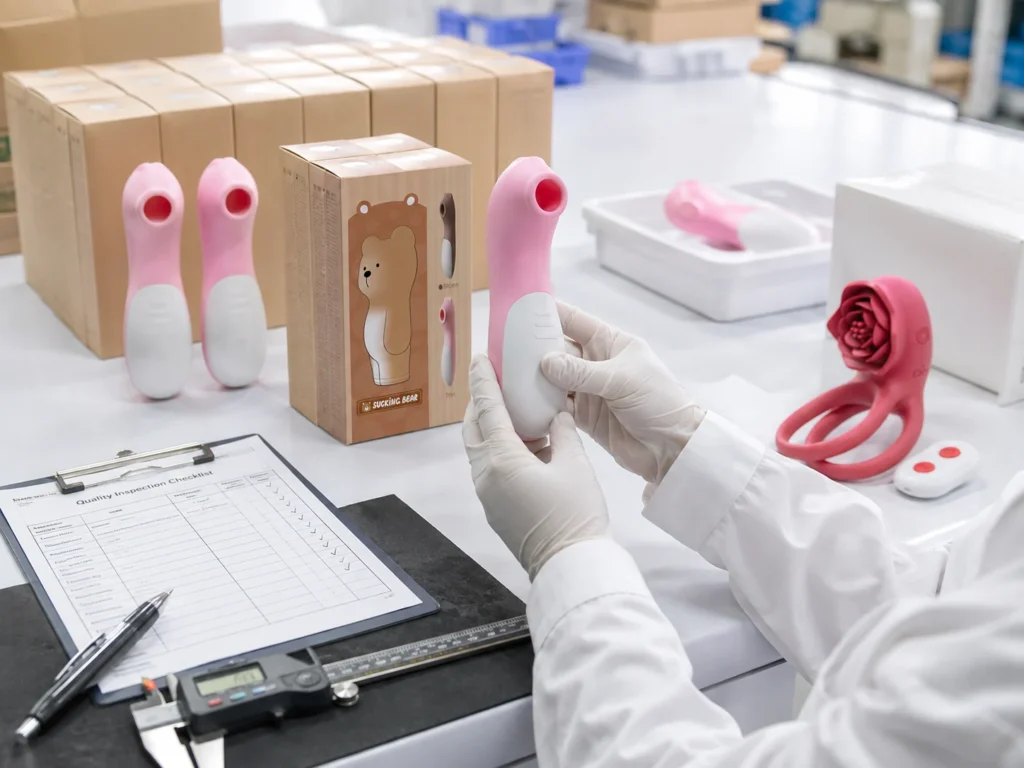
Inspection should be planned before completion. The buyer and inspection team need the approved product specification, sample reference, quantity, packaging files, labels, manuals, and acceptance checklist.
Time may be needed for:
- Final production completion and packing
- Inspection booking
- Sampling and report preparation
- Review of findings
- Correction or reinspection if necessary
Do not schedule carrier pickup at the same moment as inspection if the shipment depends on approval.
Shipping time
Freight begins after production and release. Transit depends on origin, destination, freight mode, carrier, customs, battery handling, documentation, seasonal capacity, and last-mile arrangements.
Confirm Incoterm, shipment party, destination address, carton dimensions and weights, battery transport information, customs responsibilities, and buyer-specific labels. For Amazon FBA, the buyer must also provide the current shipment plan, designated destination, and required labels.
Factors that commonly cause delays
| Delay source | What happens | Prevention |
|---|---|---|
| Unclear model selection | Samples and quotations cover products the buyer will not use. | Shortlist models against channel criteria. |
| Incomplete specification | Teams interpret functions or accessories differently. | Approve a model-specific specification. |
| Late artwork | Logo and packaging setup cannot begin. | Prepare vector logo, copy, and barcode early. |
| Multiple approval channels | Conflicting comments must be reconciled. | Nominate one buyer approver. |
| Custom color revisions | New matching and physical samples are required. | Provide a clear reference and tolerance. |
| Packaging fit issue | Insert or box must be adjusted. | Fit-check against the confirmed product. |
| Unconfirmed market text | Artwork cannot be released. | Review languages, warnings, and labels before print. |
| Late shipment instructions | Carton labels or packing may need rework. | Provide destination and labels before final packing. |
How buyers can shorten development time
- Use an existing model. Avoid unnecessary structural development for a first test.
- Keep standard colors where possible. This removes color-matching and component preparation.
- Choose one approval owner. Consolidated feedback is faster than separate comments from multiple teams.
- Prepare artwork early. Logo, copy, barcode, labels, and manual content can be reviewed while samples are in transit.
- Separate must-haves from preferences. Resolve the commercial essentials first.
- Use a dated decision list. Record what is approved and what remains open.
- Book inspection and freight provisionally. Keep release conditional on completion and approval.
Example planning timeline
| Stage | Starts when | Working reference or variable |
|---|---|---|
| Inquiry and model review | Buyer supplies category, market, quantity, and requirements | Depends on brief completeness |
| Stock sample | Model, color, fee, and shipping are confirmed | Standard sample lead time: 5–7 days |
| Sample approval | Buyer receives and tests the sample | Buyer-controlled review period |
| Artwork and packaging | Product and brand direction are confirmed | Depends on files, structure, sample, and revisions |
| Production | Sample, artwork, quantity, and order are released | About 15–25 days as a typical OEM/ODM reference, project-dependent |
| Inspection | Goods reach the agreed completion point | Depends on scope, booking, findings, and corrections |
| Shipment | Goods and documents are released | Quoted for actual route and freight mode |
Frequently asked questions
Does the 15–25 day reference include custom product development?
No. It is a typical OEM/ODM production reference after key approvals. A custom product may require industrial design, structural review, prototypes, tooling, validation, and pre-production sampling before bulk production.
Does sample dispatch include courier delivery?
No. Dispatch is the handover of an available sample. Courier transit and customs depend on destination and service.
Can packaging be developed while the sample is being reviewed?
Brand direction and copy can begin, but final structure and inserts should be checked against the confirmed product and dimensions.
What date should appear on a purchase plan?
Use milestone dates with assumptions: sample approval, artwork approval, production release, expected completion, inspection, and shipment handover. Avoid one unsupported final date.
Review the OEM/ODM route, understand the MOQ structure, and send a model-specific project brief.
Use the Sex Toy OEM RFQ Checklist to record sample, approval, production and shipment milestones before asking for a project timeline.
Request a Sample & Production Timeline
Related JWELL planning pages
Use the low-MOQ planning page, private-label workflow, quality review process and current product models to prepare the schedule inputs.
Evaluate a model before the next project decision
Request Product Samples · Use the Sample Evaluation Checklist
Confirm the exact model, sample quotation and destination-specific shipping before preparation.