
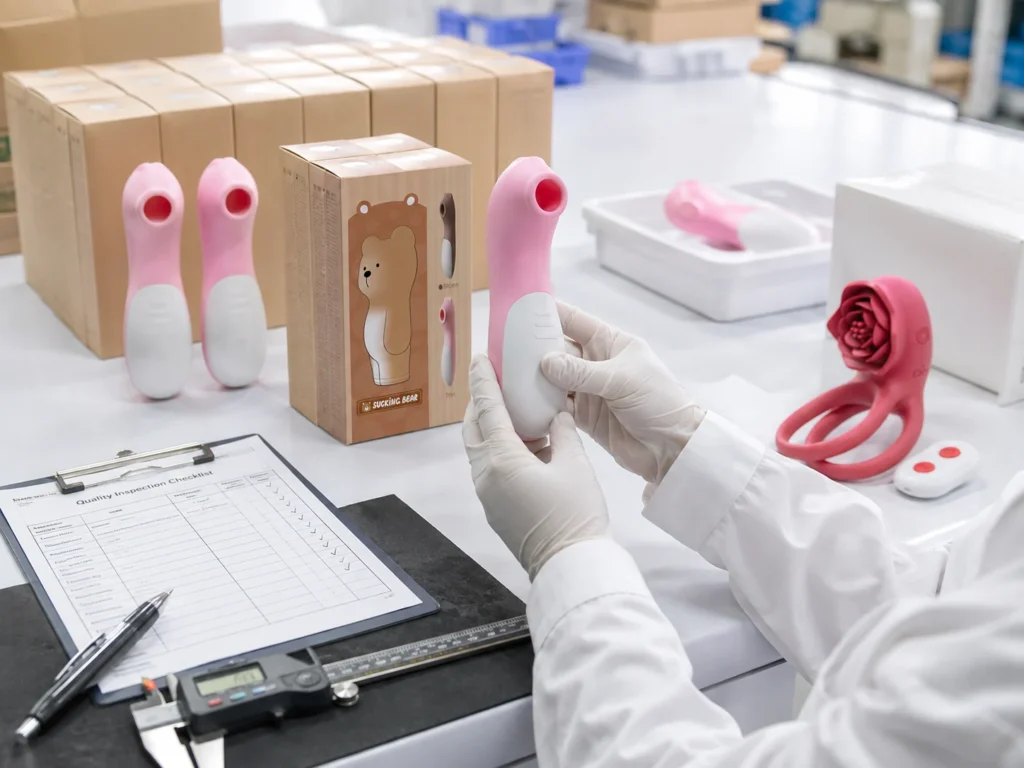
Request documents for the exact product, battery, packaging, destination market, and sales channel. A generic certificate list is not a substitute for model-specific information. The useful question is not “Does this product have every certificate?” but “Which requirements apply to this commercial configuration, and what evidence is available or still needs to be arranged?”
Adult wellness products can combine skin-contact materials, electronics, rechargeable batteries, cables, printed packaging, instructions, and market-specific labeling. Each layer can create a different information need. Buyers should build a document file early enough to resolve gaps before production or shipment.
This guide is a procurement framework, not legal advice. Requirements change by product and jurisdiction. Confirm current obligations with qualified compliance professionals, laboratories, carriers, marketplaces, and relevant authorities for the destination market.
Why “one certificate fits all products” is incorrect
Compliance requirements can depend on product design, electronics, battery type, materials, claims, destination market, and sales channel. A report for one model, material, component, or configuration may not cover another. A document can also be outdated, issued to a different company, based on a different standard version, or unrelated to the product being purchased.
For EU-bound projects, buyers can review the current official text of the EU General Product Safety Regulation and, where batteries are involved, the EU Batteries Regulation. These are starting points for professional review, not a declaration that a particular JWELL model meets a named requirement.
Start with a product compliance profile
Before asking for reports, document the product as sold:
- Model and version
- Intended market and sales channel
- Product functions and electrical characteristics
- Battery type and configuration
- Charging method and included accessories
- Material and skin-contact components
- Marketing and performance claims
- Packaging, labels, and user instructions
- Importer, brand owner, and responsible-party information required by the market
This profile gives a compliance adviser or laboratory enough context to identify applicable work. It also prevents documents from being collected without checking whether they match the final product.
Product specification sheet
The product specification sheet is the control document for procurement and quality review. It should identify the model, dimensions, weight, materials, functions, control modes, motor or actuator configuration, charging input, battery information, accessories, colors, logo, packaging, and approved revisions where relevant.
Ask for values that can be verified and keep ambiguous marketing terms out of the technical specification. If a mode count, material, battery value, or waterproof rating is not confirmed, do not publish it to customers until the information is resolved.
Material information
Request a component-level material description rather than one general term for the entire product. A device may combine silicone, ABS or other plastics, metal parts, coatings, adhesives, electronic components, cable materials, and packaging substrates.
Useful questions include:
- Which part uses which material?
- Which surfaces are intended for user contact?
- Are colorants, coatings, adhesives, or soft-touch finishes involved?
- Does the final production material match the tested or documented sample?
- Are material declarations or model-specific reports available?
Do not turn an informal material description into an unsupported “medical-grade,” “certified body-safe,” or regulatory claim.
Battery information
For rechargeable products, request the battery chemistry, nominal voltage, capacity, configuration, whether it is contained in equipment, and information needed by the selected shipping method. Confirm that battery information matches the production model and shipping documents.
Air transport requirements can depend on battery type, configuration, and rating. The IATA battery guidance explains that battery-powered goods require correct identification, packing, marking, labeling, and documentation under applicable transport rules. Buyers should confirm current requirements with the freight forwarder or carrier before shipment.
Charging information
Record the charging method, input values, cable or magnetic connector, charging-time reference, indicator behavior, and whether a power adapter is included. Included electrical accessories can change the project scope, documentation, labeling, packaging, and destination-market review.
The user manual and package should not show a charger, cable, voltage, or charging method that differs from the approved product configuration.
Packaging information
Packaging documentation should include the approved dieline, material or structural description, insert, barcode, labels, manual, accessories, warnings, and outer-carton requirements. Confirm that the final product fits securely and printed information remains legible after production.
For multi-market packaging, identify which information is common and which varies by language, importer details, destination requirements, or sales-channel labels. Version control is essential when one product has several packaging files.
User manual
The manual should match the actual product and approved claims. It can include product identification, controls, charging, use, cleaning and care, storage, warnings, disposal information, troubleshooting, and contact details as required for the project.
Check translations independently. A visually complete manual can still be incorrect if it refers to another model, a different button sequence, an unsupported feature, or the wrong charging method.
Labels and warnings
Labels and warnings are market- and product-specific. Confirm where required information will appear: product body, package, manual, sticker, importer label, or another approved location. Review text size, permanence, language, symbols, model identification, batch or traceability information, electrical information, and responsible-party details with the appropriate adviser.
Do not copy another brand’s warning panel. It may refer to a different product, jurisdiction, battery, intended use, or economic operator.
Available test reports
When a report is provided, review more than its file name. Check:
- Applicant, manufacturer, or report holder named
- Laboratory identity and report number
- Product model and photographs
- Materials, components, or configuration covered
- Standard or method and version
- Issue date and report status
- Results, limits, exclusions, and remarks
- Whether the commercial product still matches the tested sample
A report can be useful evidence without proving every obligation for every market. Ask a qualified reviewer to assess relevance to the final configuration and intended claims.
Model-specific documentation
Create a model document index. It should show which specification, material record, battery document, report, manual, artwork, and inspection record belongs to which model and revision. Avoid a shared folder where files cannot be connected to a specific product.
JWELL may assist with available documentation review, testing coordination, destination-market requirement discussion, and product-specific compliance preparation. Availability varies by model and project; no document should be assumed until confirmed.
Sample approval record
The sample approval record connects the buyer’s decision to the production standard. Include sample date, revision, product photos, function configuration, color, finish, logo, accessories, charging, packaging, labels, manual, and accepted deviations.
If the product changes after the sample is approved, record the change and decide whether a revised sample or additional review is necessary.
Inspection report
An inspection report should identify the purchase order, product, quantity, inspection date, and checks performed. Depending on the project, checks may cover quantity, assortment, appearance, dimensions, functions, controls, charging, indicators, logo, accessories, manuals, packaging, labels, carton marks, and packing configuration.
The acceptance criteria should be agreed before inspection. A report cannot be interpreted properly if the approved sample and specification are missing.
Pre-shipment inspection
Pre-shipment inspection is a final comparison against the approved order, not a substitute for product development or compliance review. Confirm scope, timing, access, sampling plan, acceptance criteria, and response to nonconformities before booking the inspection.
Allow enough time to review results and address issues before the shipping deadline. Inspection after cargo is sealed or the carrier is booked can leave little room for correction.
Destination-market review
Requirements vary by jurisdiction and can change. Build a market-specific review that considers product safety, electronics, batteries, chemicals or materials, labeling, language, traceability, waste or recycling obligations, importer or responsible-party duties, transport, and marketplace rules as applicable.
For US-bound projects, the official U.S. Consumer Product Safety Commission business guidance is an authoritative starting point for understanding consumer-product responsibilities. It does not replace a model-specific legal assessment.
Buyer document checklist
| Document | When to request | Why it matters |
|---|---|---|
| Product specification sheet | Before sampling and quotation confirmation | Defines the model and commercial configuration |
| Material information | During model review | Connects materials to components and intended contact |
| Battery and charging information | Before transport and packaging planning | Supports shipping, labeling, and product review |
| Available test reports | Before claims or market decisions | Allows relevance and coverage to be assessed |
| Packaging dieline and artwork | Before printing | Controls labels, warnings, barcodes, and presentation |
| User manual | Before production approval | Confirms instructions match the product and market |
| Approved sample record | Before bulk production | Creates a physical and written approval standard |
| Inspection criteria and report | Before and after inspection | Defines checks and records shipment condition |
| Market review record | Before launch and when rules change | Shows which obligations were assessed for the destination |
Questions buyers should ask
- Does each document identify the exact model and revision?
- Does the production product match the documented or tested sample?
- Which requirements remain the buyer or importer’s responsibility?
- Does a custom component, color, battery, cable, or package change the review?
- Which additional testing or professional assessment is needed for the target market?
- Who controls document versions and approvals?
- What must be completed before production, inspection, and shipment?
Frequently asked questions
Can one report cover several models?
Possibly, but only when the report scope, models, components, and configuration support that conclusion. Check the actual report rather than relying on a file name.
Should buyers request documents before ordering samples?
Request an initial document-availability review during model selection, then verify the detailed set against the approved commercial configuration.
Does a compliance document replace inspection?
No. Documentation review, sample approval, production controls, and shipment inspection serve different purposes.
Who determines the final market requirements?
The buyer should obtain qualified advice for the destination market and sales channel. JWELL can discuss product information, available documents, testing coordination, and preparation within the confirmed project scope.
Review JWELL’s quality and compliance process, browse the product catalog, or send the model, destination market, and document questions through the project inquiry form.
Record model-specific document questions in the Sex Toy OEM RFQ Checklist before requesting the final quotation and approval plan.